DAFT PUNK
| Years active: | Genres: | Related artists: |
| 1993 - 2021 | Dance, electronic | n/a |
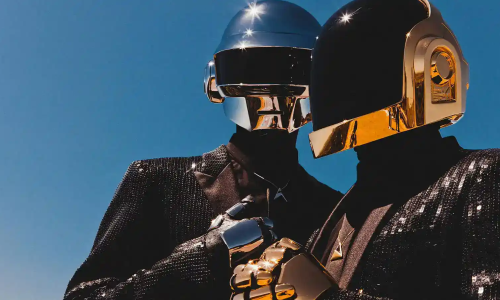
Line-up: Thomas Bangalter (the visor bot) and Guy-Manuel de Homem-Christo (the dome bot), both responsible for programming, samples, instruments, vocals, you name it.
Seeing the video for "Around the World" as a young kiddo is a memory that's stuck in my head clear as day. The visuals were hypnotic, with this group of chaotic, entirely unrelated characters wiggling and moving around a small stage in a manner that made it strangely compelling to watch even though you can't say why. Then the realisation that they were all synchronised with parts of the song hit me (partially thanks to some helpful trivia pointers that MTV placed on the screen at the time for some videos) and it blew my mind. And I wasn't the only one either - based on anecdotal evidence gathered over the years, I was but one of countless young millennials who had a similar revelation and we all became equally obsessed about the video. The song, too. It was unlike anything I had really heard before, so repetitive yet so magnetic, where each loop was so captivating that I wanted it to continue over and over again. It was my first exposure to proper dance music and while it didn't exactly turn me into a clubbing kind of guy, it definitely opened a door to another musical horizon.
It wasn't until I started writing this introduction that I realised just how deeply entrenched Daft Punk have been during my own musical journey - and not just mine, but nearly everyone around my generic age range and demographic. Almost every single album that the two robots released became a monocultural pop culture event that united people across musical borders. Homework started a dance revolution among the indie crowd and captured young minds; Discovery became an universally beloved artifact from the moment it was released which absolutely everyone went mad over, and we'd rush to watch music video shows to catch the latest video as the narrative followed from one to the next; how Human After All was the great betrayal that similarly unified everyone except this time in pure disbelief and shock; how a mere video teaser of Random Access Memories blew up the internet, as a prologue of how the album would conquer the world soon thereafter. Even the extracurricular material had weight and impact, from how Alive 2007 effectively created the EDM live show as we know it today and the concept of Daft Punk doing a Tron soundtrack was basically the only thing that anyone ever talked about when Tron: Legacy came out. Even their one-off, one-song side project has become a widely beloved classic. Even the remix album lives in infamy because it received one of old-school Pitchfork's most creatively caustic reviews and now regularly receives a mention just because of that. I don't think I know a single act where absolutely every single thing they did (bar, like, Alive 1997?) unleashed a shockwave through collective memory and lived experience.
As a result, Daft Punk have solidified their status in the annals of pop culture and they continue to be a relevant reference point that every single generation can tap onto with no prior warning and everyone will get it. They set the stage for French house as a phenomenon and molded how dance music would enter the wider colloquial language in the new millennium, and they grew and changed together with their audiences, ensuring that every time there was something new around the corner to surprise the listener. The long waiting times just added to the hype, as their previous successes were given ample time to fix their place in everyone's musical habits, ready for the next album to come in some years time and rewrite everything again. This was further fueled by the constant barrage of immediately memorable visuals - most prominently the robot suits which basically overwrote their original identities - which made every video an event and every album cover or promo shot an iconic piece of imagery. This is all really hyperbolic and I'm almost ashamed to write all this, but the more I think about what a miraculous job Thomas Bangalter and Guy Manuel de Homem-Christo managed to pull off, the more it astounds me. I'm not sure how well their legacy translates to anyone who's only discovering them now, but their rise across the years from unknowns to fervently followed cultural touchpoints is wild in retrospect.
They couldn't have made it there without the tunes, which should be obvious. There's a lot of stage dressing around their whole existence, but ultimately Daft Punk retained their status because they kept delivering the bangers. Their release schedule wasn't sluggish just because they were so busy, but also because they took their time to fine-tune their albums to exactly what they wanted to represent with them. How that came through depends on the album, but each one (maybe with the exception of Homework, the slightly shaky debut) is a notably cohesive collection of songs where each part not only builds a part of a wider, more conceptual whole but stands so proudly in its own right that you could have released most of their songs as singles. That includes the decidedly confrontational Human After All too, by the way (though what I think of that beyond that statement remains to be read later down the line), which certainly doesn't sacrifice listenability even as it stands to break down everything Daft Punk was meant to stand for. The duo have had the honour of pulling out some of the finest pop songs of the new millennium out of their bag, and those accolades stand strong without any added gimmicks.
Too superlative? Yeah, maybe. I'm not even the biggest ever fan of Daft Punk, believe it or not. But there is this mythical aura that's formed around their music over the years, and every album comes with its own set of super-specific memories of where I were when they came out, the places I heard certain songs in, shared experiences with others who were won over by their charms from fellow music geeks to my sister, who was abruptly burst in a singalong of "One More Time" with me while walking down a street the year the song came out.
Oh, yeah, and as to who they were... Before they donned their robot helmets on, Guy Manuel de Homem-Christo and Thomas Bangalter were just two friends who had played in a scrappy band together with another friend of theirs, which lasted all of six months before everyone decided it wasn't worth it and ended the project (that friend, Laurent Brancowitz, would eventually co-found Phoenix who'll likely have their own page here one day, and I'll inevitably forget to edit this paragraph when they do). A music magazine interview had called the band's music "daft punky trash" which gave the duo the name for their next, more electronic and sampler-based project. A string of demos and minor release singles followed until in the mid-90s they signed with Virgin and, well... that's when the story got exciting. Read on.
(Discography gaps: Daft Club, Alive 1997)
Main chronology:
- 1997: Homework
- 2001: Discovery
- 2005: Human After All
- 2007: Alive 2007
- 2013: Random Access Memories
Other releases:
- 2010: Tron Legacy (Original Motion Picture Soundtrack)
Side projects:
Stardust
- 1998: Music Sounds Better With You (CDS)
Main chronology
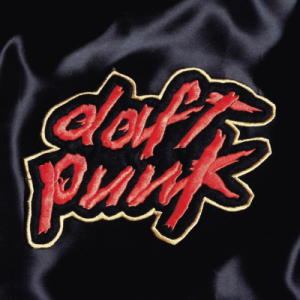
HOMEWORK 
| Released: | Rating: | Key tracks: |
| Jan 1997 | 6 | "Da Funk", "Fresh", "Around the World" |
1) Daftendirekt; 2) WDPK 83.7 FM; 3) Revolution 909; 4) Da Funk; 5) Phoenix; 6) Fresh; 7) Around the World; 8) Rollin' & Scratchin'; 9) Teachers; 10) High Fidelity; 11) Rock'n Roll; 12) Oh Yeah; 13) Burnin'; 14) Indo Silver Club; 15) Alive; 16) Funk Ad
As unguarded and carefree as they come, but a little less would have gone a longer way during these less cohesive times.
My life with Daft Punk didn't really begin properly until Discovery, but Homework did the groundwork. As elaborated in the intro segment, seeing the video for "Around the World" randomly on MTV in the late 1990s is one of those formative music moments of my youth that I now wax poetic about. I may not have been a cool young adult in New York who was discovering club music in the indie discos, but I was an easily impressionable young mind who was entranced by how "Around the World" didn't really sound like anything else I had heard of before then, and it helped develop the understanding and taste for what would come eventually. The album, though, didn't quite become the gateway you'd perhaps have thought it would be. It's quite amusing how around its release this was lauded as a shake-up, and now in the context of everything since it's the humblest beginnings you could imagine for the duo. In good of course, but also with the bit of awkwardness that sometimes comes with that.
I feel like Homework doesn't get brought up as often anymore when Daft Punk is discussed, as Discovery (the millennial classic), Human After All (the black sheep) and Random Access Memories (the next gen classic) all now occupy that conversation space with greater prevalence. That's possibly because they've all got their big contextual stories around them, and meanwhile Homework is just two guys banging out the tunes in their basement parties. It is the only Daft Punk album where the duo aren't challenged by the prospect of being Daft Punk (they even appear without the robot gear in the booklet photo) and thus there are no larger-than-life concepts, reinventions or expectations at play. Instead, what you've got is a splash of excited noise-making, the duo keeping things simple (partly because they don't yet have the means for anything more opulent) while paying homage to their inspirations, but accidentally leaving their own mark on the proceedings to such an extent that the entire vague concept of 'French house' was born here. It's about as unguarded as Daft Punk can get and that's fun to hear in the wider context, but ultimately what this boils down to is that Bangalter and de Homem-Christo are still in the phase of just throwing things together and being too thrilled about it to care what sticks. The album is by and large built around the repetition of small segments in an effort to piece together a ladder to club time euphoria, but Homework is a hefty 74-minute chunk of music and not everything within it is worth repeating as much. Would we, for example, really be missing out on anything crucial if e.g. "Rollin' and Scratchin'" or "Rock'n Roll" were half their length or maybe even completely absent from the album? Their squelchy and screechy migraine-pounding 5-second loops get downright exhausting after a couple of minutes, let alone seven and a half, and though they are the most extreme examples of the album twitching still until its worn a groove on the ground, there are plenty of other moments where Homework starts to drain its own energy, as one economically skeletal backbeat loop after another keeps monotonously churning on without being able to lift you off your feet as intended. I don't often get exhausted by long albums but Homework can sometimes feel like its namesake.
When it's good though, it's great. I imagine most of us are well aware of the two appointed classics of the record, and they stand the test of time like fine wine. "Da Funk" inspired countless indie hipsters to embrace dance music (and now they get to shout that "they were there") and its pull has retained all its sharpness and might - that guitar-esque all-caps RIFF is an absolute monster that twirls your ears around its little finger and then tosses you out on the dancefloor to ride on top of that thick, sturdy drum beat that hits you straight in the spine. Still impressive, and even more immortal is the already mentioned "Around the World" is immortal which basically creates its own world for seven minutes (each minute completely deserved and essential this time around) and 140-odd repetitions of its title. What makes it so fantastic are all of its little variations that are nestled deep into its monotonously marching groove, which play out almost invisibly if you're not paying attention but which impact the song's mood and tone so massively. All the instruments get their own particular solo moments, with the drums loosening and tightening their groove, the rigorous bass suddenly bursting into a giddy little frolic, the guitar scratches and keyboard bleeps injecting extra life into their otherwise rhythmic proceedings and opening the song up. Above all, there's the background texture pads that make the biggest impression during the break but which remain hanging around in the background - they expand the song into widescreen mode and make it sound almost dreamy, turning this certified dancefloor banger into something a little more ethereal at times. That's why it's so great even when you're just lounging in your bedroom and not moving a muscle, because the song takes a proper trip across its length that flashes different scales of emotion and energy, making those memes about the sheer amount of times its title is repeated feel so reductive compared to when you actually listen to the song. "Around the World" is a masterpiece and the beating heart and soul of Homework, and still sounds fresh and impressive.
There's more too - "Revolution 909" and "Fresh" are late-90s French house at its coolest, "High Fidelity" and "Burnin'" point the way towards Discovery, "Daftendirekt" is an intro and "Teachers" is a glorified interlude but both have that youthful glee sparkling in their eyes that gives them a catchily cheeky swagger. During its best moments Homework makes it obvious why it caused a ripple and how it spearheaded an entire movement of dance music to such an extent that its particular leanings engulfed everything else in the mainstream for the next couple of years. But it absolutely does not hold to its massive size, with most songs not mentioned not really amounting much to mention either. The last third especially can be a real slog at times as whole stretch from "Rock'n Roll'" to "Alive" largely just exists (with "Burnin'" briefly brightening things up) - but by that point the album has amassed enough goodwill that you can almost let it slip. Homework is the least of the four main albums for me and the one I reach out to the least, but even with its flaws there's something there that still begs to captivate and engage. It doesn't always get there, but it's a testament to the Daft duo's nascent talent in production and melody that I still want to keep on trying to make it unlock for me as a whole, even if decades of experience is telling what won't happen. This is their "purest" dance album and there will be some who will absolutely consider it a classic because of that, but it's not quite where I align with it and I find it better in short, select bursts over trying to listen to the entire thing all in one go.
Physically: Clear jewel case, with a simple booklet featuring a diorama of knick-knacks and inspirations in its centerfold - open it up and each song gets assigned a little, thematically or title-referencingly appropriate section of the wider picture for themselves. And there is, of course and as mentioned, a picture of the two guys in plain sight which is practically shocking by this point. Cool, though. Humble beginnings indeed.
[reviewed: 12/08/2026]